Can an Elderly Person Die From Depression and What Helps Reduce Risk
Can an elderly person die from depression? The safest short answer is that depression is usually not a direct physical cause of death by itself, but untreated depression in later life can raise serious risks. It can increase suicide risk, worsen self-care, reduce eating and movement, make chronic illness harder to manage, and cause warning signs to be missed. That is why depression in older adults deserves calm, early attention. For families who are unsure whether mood changes may reflect depression, a senior depression screening step can help organize observations before a conversation with a health professional.

The Short Answer Is Risk, Not Certainty
Depression should never be treated as an automatic death sentence. Many older adults improve with the right mix of medical care, therapy, social support, safer routines, and follow-up. At the same time, depression is not "just sadness" and it is not a normal part of aging. When symptoms last, deepen, or begin to affect daily life, they can become medically important.
The key distinction is direct versus indirect harm. Depression may not make the body stop in a simple one-cause way. Instead, it can change decisions, energy, appetite, sleep, movement, motivation, and hope. Those changes can affect safety and health over time. An older person may skip meals, avoid medication, miss appointments, stop moving, withdraw from people who would notice a problem, or talk about being a burden.
So the better question is not only "Can you die from depression itself?" A more useful question is: "Is depression increasing risk in ways we can notice and respond to?" Often, the answer is yes.
How Depression Can Become Life-Threatening in Older Adults
Older adults often live with overlapping health, mobility, grief, and social changes. Depression can sit in the middle of those pressures and make each one harder to manage. A GDS screening score cannot explain every cause, but it can give families and clinicians a clearer starting point for discussing symptoms.
Suicide and self-harm risk
The most urgent reason depression can become life-threatening is suicide risk. Older adults may be less likely to talk openly about emotional pain, and some may describe it as tiredness, being useless, or not wanting to be a burden. Any talk of wanting to die, giving possessions away, looking for ways to self-harm, saying goodbye, or sudden calm after severe distress should be treated as urgent.
If someone may harm themselves, do not leave them alone. In the United States, call or text 988 for the Suicide and Crisis Lifeline, contact local emergency services, or go to the nearest emergency department. If you are outside the United States, use your local emergency number or crisis line. Asking directly about self-harm does not plant the idea; it can open a door to help.
Physical health can decline when daily care breaks down
Depression can make ordinary health routines feel impossible. A person may know they should eat, drink water, take medicines, attend appointments, walk, or use a mobility aid, but depression can drain the energy needed to follow through. Over time, this can worsen diabetes, heart disease, stroke recovery, pain, frailty, or recovery after surgery.
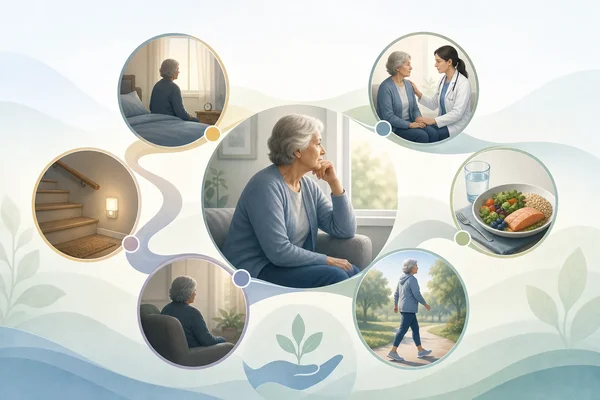
This does not mean depression is the only cause of decline. It means depression can be one part of a dangerous chain. Low mood may lead to low activity. Low activity may lead to weakness. Weakness may increase falls. Falls may increase fear and isolation. Isolation may deepen depression. Breaking that chain early matters.
Appetite, sleep, and medication patterns can shift
Some older adults with depression eat much less. Others eat more but choose fewer nourishing foods. Sleep may become too short, too long, or broken through the night. These patterns can affect balance, memory, concentration, immune strength, and the ability to manage other conditions.
Medication issues are also important. Depression may cause missed doses, accidental double doses, or loss of interest in medication routines. Some medicines or medical problems can also worsen mood, so a clinician should review the full picture rather than assuming every change is emotional.
Isolation makes problems easier to miss
Depression often pulls people away from the exact relationships that could protect them. An older adult may stop answering calls, cancel meals, avoid religious or community activities, or say they are too tired for visitors. The family may interpret this as preference or personality, while the older adult may be silently struggling.
Isolation also reduces the chance that someone notices weight loss, confusion, unsafe home conditions, missed bills, alcohol misuse, or statements about death. Regular contact is not a complete answer, but it is a practical safety net.
Common Causes and Triggers Behind Late-Life Depression
There is rarely one simple cause of depression in the elderly. Common contributors include chronic pain, loss of a spouse or close friend, retirement stress, reduced independence, financial worry, cognitive change, sensory loss, medication side effects, and long periods of loneliness.
Medical conditions can also overlap with mood symptoms. Heart disease, stroke, Parkinson's disease, thyroid problems, vitamin deficiencies, cancer, dementia, and chronic pain can all affect energy, sleep, appetite, concentration, and mood. This is why a full medical review matters when depression appears suddenly or changes quickly.
Grief deserves special care. Grief can involve deep sadness, tears, sleep changes, and waves of longing. Depression is more concerning when emptiness, hopelessness, self-blame, loss of interest, or inability to function becomes persistent. The line is not always obvious, so families should avoid arguing over labels and focus instead on support, safety, and medical guidance.
Warning Signs That Need Fast Attention
Some symptoms call for prompt help, especially if they are new, worsening, or out of character:
- Talking about death, suicide, being a burden, or having no reason to live.
- Giving away valued belongings, saying goodbye, or making sudden final arrangements.
- Withdrawing from family, friends, meals, hobbies, or faith/community routines.
- Not eating, losing weight, dehydration, or neglecting hygiene.
- Missing important medication doses or medical appointments.
- New or increased alcohol or drug use.
- Extreme sleep changes, agitation, confusion, or reckless behavior.
- Fixation on pain, illness, guilt, worthlessness, or hopelessness.
If danger seems immediate, treat it as a crisis. Stay with the person, reduce access to obvious means of harm if you can do so safely, and contact emergency or crisis support. If the situation is not immediate but still concerning, schedule a medical appointment soon and share specific examples rather than only saying "he seems depressed" or "she is not herself."
What Helps Reduce the Risk
The most effective treatment for depression in older adults depends on the person, their health conditions, medications, preferences, and level of risk. Many people benefit from a combination of professional mental health care, primary care follow-up, medication review, therapy, social reconnection, movement, sleep support, and help with practical stressors. The right plan should be made with qualified professionals.
Families can help by making support concrete:
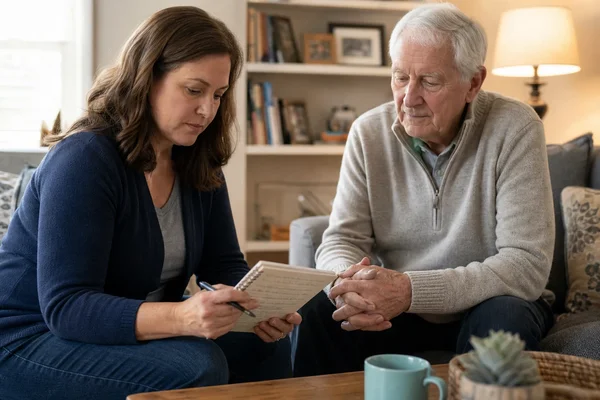
- Keep a simple symptom log with dates, appetite, sleep, mood, activity, and concerning statements.
- Ask about self-harm directly if you are worried.
- Offer choices instead of commands, such as "Would morning or afternoon be easier for a doctor visit?"
- Support meals, hydration, transportation, and medication organization.
- Encourage small social contact, even brief calls or short visits.
- Remove shame from the conversation by treating depression as a health concern.
- Follow up after appointments, because one visit may not be enough.
It is also important to look for reversible contributors. A medication side effect, untreated pain, hearing loss, sleep apnea, low thyroid function, vitamin deficiency, bereavement stress, or a new memory problem can change the care plan. Depression care is often strongest when emotional, medical, and practical needs are addressed together.
How Screening Fits Into a Safer Plan
Screening tools are useful because they turn vague worry into a more structured conversation. The Geriatric Depression Scale asks simple yes-or-no questions designed for older adults. It can highlight patterns such as loss of interest, low mood, low energy, or reduced satisfaction with life.
A screening result should not be used as a final medical answer. It is a prompt for discussion. A high score can support a call to a primary care clinician, therapist, geriatric specialist, or mental health professional. A lower score does not mean concerns should be ignored if warning signs are present.
For caregivers, screening can also reduce conflict. Instead of saying, "You are depressed," a caregiver can say, "I noticed several changes, and this brief screening suggests it may be worth talking with your doctor." That softer approach is often easier for an older adult to hear.

A Calm Next Step for Families and Older Adults
If you searched "can an elderly person die from depression," you are probably worried about someone real. Start with safety, then structure. If there is talk of self-harm, a plan, access to lethal means, or sudden severe distress, seek crisis help now. If the risk is not immediate, write down what has changed, arrange a medical visit, and ask for a review of mood, medications, sleep, pain, nutrition, and social support.
For a non-emergency first step, a private GDS self-check can help prepare for that conversation. Use the result as one piece of information, not as a label. Depression in older adults can be serious, but early attention, steady support, and professional care can reduce risk and help the person feel less alone.
FAQ
Can your body shut down from depression?
Depression does not usually make the body shut down in a single direct way. However, severe or untreated depression can affect eating, drinking, sleep, movement, medication routines, and safety. Those changes can contribute to medical decline, especially in frail older adults or people with chronic illness. Sudden refusal to eat or drink, severe weakness, confusion, or self-harm thoughts should be treated as urgent.
What is the most common cause of depression in the elderly?
There is no single most common cause for everyone. Late-life depression often comes from a mix of health problems, chronic pain, grief, isolation, loss of independence, medication effects, financial stress, and brain or body changes. Because several causes may overlap, a medical and mental health review is usually more helpful than trying to find one cause at home.
What happens if you stay depressed for too long?
Long-lasting depression can reduce quality of life and may increase risk through poor sleep, poor nutrition, inactivity, missed medical care, social withdrawal, substance use, and hopelessness. It can also make other health problems harder to manage. Persistent symptoms deserve professional attention, especially when they interfere with daily life or relationships.
What is the last stage of depression?
Depression is not usually described in fixed stages with a clear "last stage." Severe depression may involve intense hopelessness, inability to function, psychosis, self-neglect, or suicidal thoughts. Any of these signs should be taken seriously. The focus should be on safety and timely care rather than trying to place the person in a stage.
Can you die from depression itself?
Depression is more often linked to death through indirect pathways, such as suicide, self-neglect, reduced medical care, poor nutrition, falls, substance use, or worsening chronic illness. That is why the question "can an elderly person die from depression" should lead to a practical response: check safety, document changes, seek professional guidance, and keep supportive contact steady.
What should a family do if they are worried tonight?
If there is immediate danger, stay with the person and contact emergency services or a crisis line such as 988 in the United States. If there is no immediate danger, call the person's clinician, arrange a near-term appointment, increase supportive contact, and write down specific changes in mood, eating, sleep, medication use, and statements about death or hopelessness.