Elderly and Depression Statistics: What the Numbers Mean for Older Adults
Elderly and depression statistics can look confusing because different reports measure different things. Some count major depressive episodes, some count current symptoms, and some use screening tools that are meant to flag possible concern rather than settle a clinical answer. For older adults, caregivers, and clinicians, the best use of the numbers is practical: understand how common depressive symptoms can be, notice when risk rises, and decide when a careful conversation or professional evaluation makes sense. If you want a private starting point for reflection, a free senior depression screening tool can help organize observations before speaking with a qualified professional.
The headline numbers depend on what is being measured
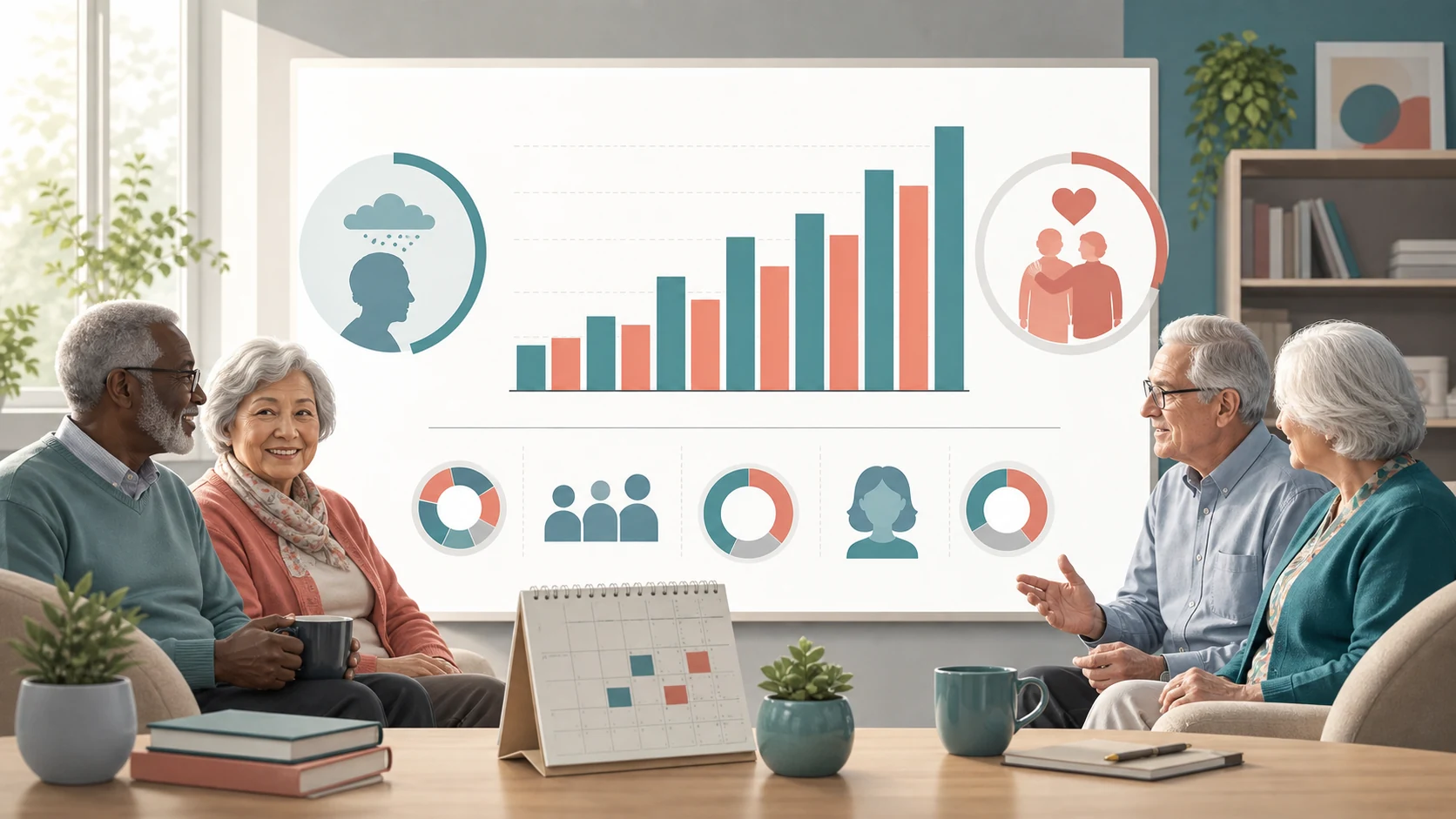
Public health sources do not all use the same definition of depression in older adults. That is why one page may report a low single-digit rate while a scholarly review reports a much higher pooled prevalence.
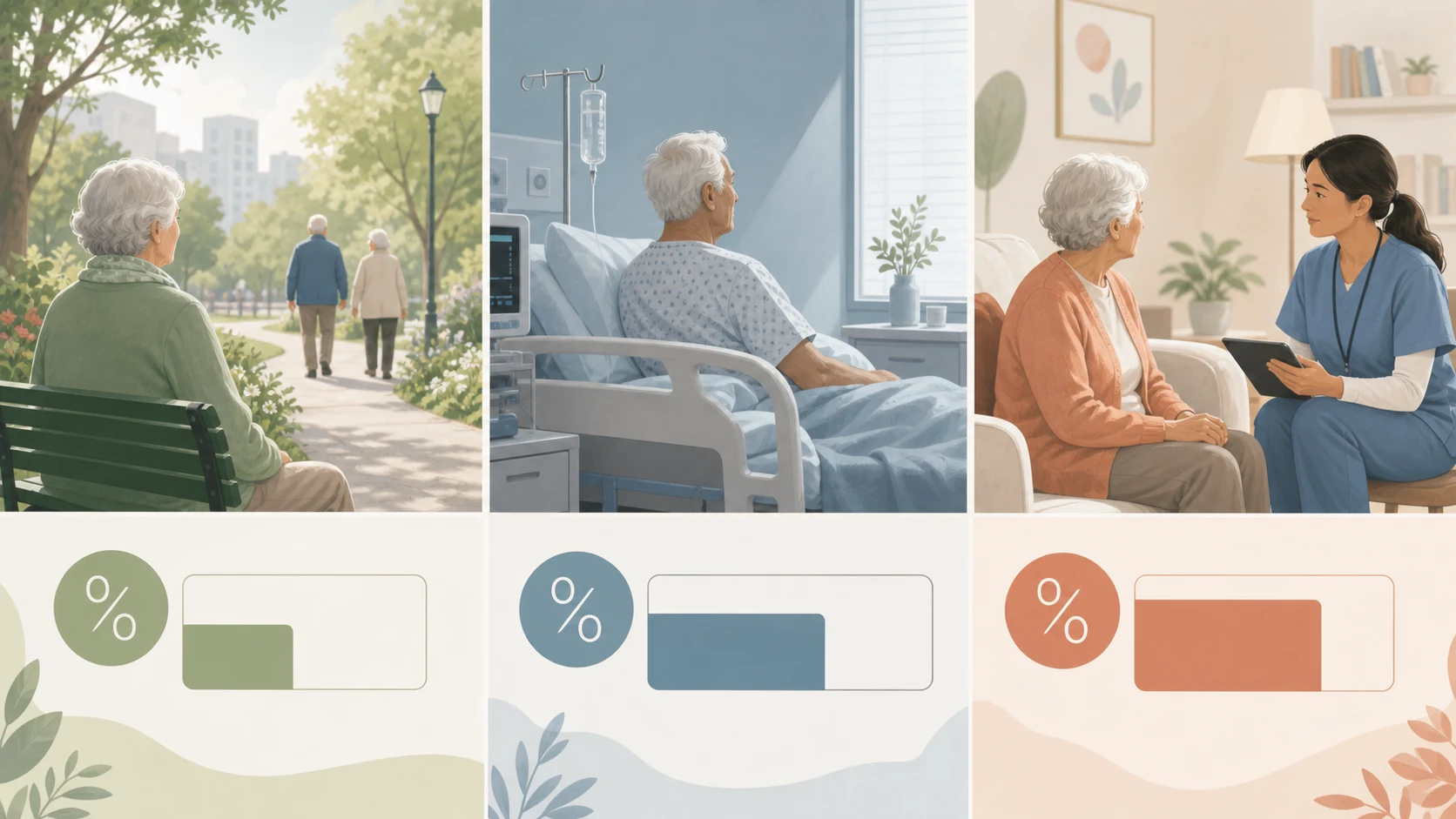
The CDC has long emphasized that depression is not a normal part of aging. Its older-adult guidance commonly describes major depression as affecting about 1% to 5% of community-dwelling older adults, with higher estimates in medical settings, including about 11.5% among hospitalized older adults and about 13.5% among older adults who need home health care. Those numbers focus on more serious depression in specific care contexts.
Other studies look at depressive symptoms, not only major depression. A 2025 CDC National Center for Health Statistics data brief reported that 8.7% of U.S. adults age 60 and older had depression symptoms in the prior two weeks during an August 2021 to August 2023 survey period. Systematic reviews often find still higher pooled estimates, especially when they include international studies, varied screening scales, and older adults living with illness, disability, bereavement, or social isolation.
The takeaway is not that one number is the single right answer. It is that the question matters: Are we counting a formal clinical condition, recent symptoms, screening-positive results, or distress in a high-risk setting?
Why prevalence can rise in hospitals, home health, and long-term care
Depression statistics often rise as medical complexity rises. Older adults who are hospitalized, recovering from surgery, adapting to new disability, or receiving home health care may be dealing with pain, sleep disruption, medication changes, grief, reduced independence, or worries about the future. These pressures do not make depression inevitable, but they can increase vulnerability.
| Setting or measure | What the statistic often reflects | Why it may differ |
|---|---|---|
| Community-dwelling older adults | Lower estimates of major depression | More independence and broader health variation |
| Hospitalized older adults | Higher estimates | Acute illness, pain, sleep disruption, uncertainty |
| Home health care | Higher estimates | Functional limits, chronic illness, caregiver strain |
| Symptom screening studies | Often higher than major depression estimates | Screening tools count possible symptoms, not final clinical conclusions |
This is why a caregiver may see two true statements that seem to conflict: depression may affect a minority of independent older adults, yet depressive symptoms may be common in frail or medically stressed groups. For families, the practical question is not whether a number sounds high or low. It is whether a specific older person has a meaningful change in mood, interest, energy, appetite, sleep, social connection, or daily function.
Depression is not normal in the elderly, but risk factors are common
The statement "depression is normal in the elderly" is false. Aging can bring grief, role changes, health problems, and losses, but persistent depressive symptoms should not be dismissed as simply getting older. Many older adults remain emotionally engaged, socially connected, and resilient. When symptoms appear, they deserve attention.
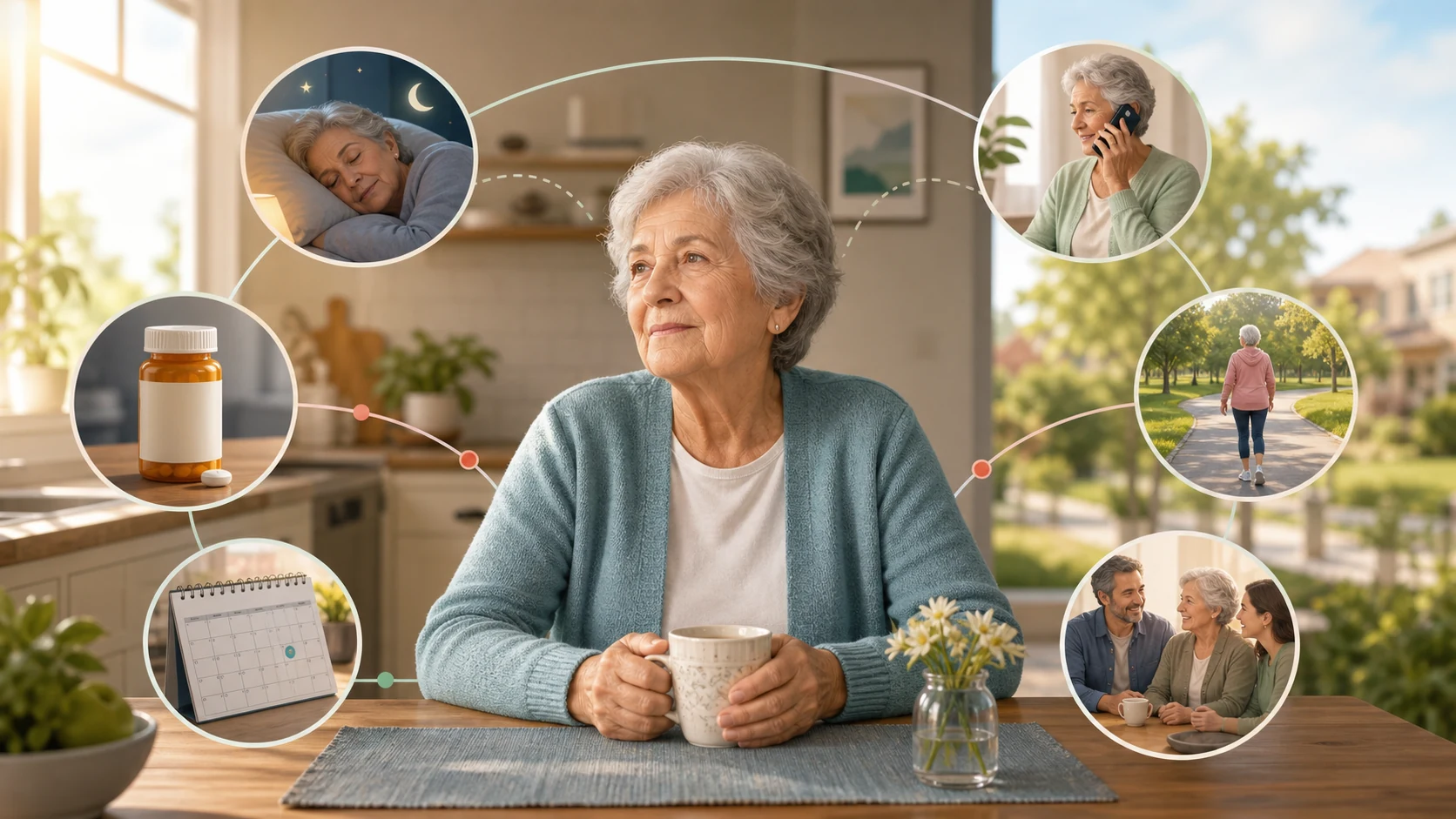
Common risk factors include chronic pain, major medical illness, stroke or heart disease, memory concerns, sensory loss, alcohol misuse, poor sleep, isolation, recent bereavement, caregiving stress, financial strain, and loss of independence. Some older adults express depression less through sadness and more through fatigue, irritability, worry, loss of pleasure, slowed activity, unexplained physical complaints, or withdrawal from familiar routines.
Statistics help explain why these signs can be overlooked. If people assume low mood is expected after age 70 or 80, they may wait too long to ask about it. If families expect depression to look exactly like it does in younger adults, they may miss changes in appetite, sleep, concentration, or motivation. A structured conversation can make those quieter signs easier to name.
What scholarly articles add to the statistics
Scholarly articles on depression in older adults often produce broader estimates than public-facing summaries because they combine many populations, countries, and methods. A systematic review and meta-analysis may include nursing home residents, rural communities, post-hospital patients, or people with chronic disease. It may also include studies that use different cutoff scores on different tools.
That makes meta-analysis useful, but it requires careful reading. A pooled prevalence number is not a personal forecast. It is a way to summarize what researchers observed across many settings. For example, a review that includes many high-risk clinical populations will usually report a higher prevalence than a survey of independent community adults. A review that counts depressive symptoms will usually report a higher number than a study limited to major depression.
For SEO readers searching "depression in older adults scholarly article," the key lesson is simple: do not compare statistics without checking the population, age range, country, setting, measurement tool, and time period. Those details explain why estimates vary. They also make the numbers more useful. A caregiver supporting a parent after hospitalization may need a different level of vigilance than a healthy, socially active older adult living independently.
How guidelines turn statistics into action
Depression in older adults guidelines generally move from recognition to assessment, safety awareness, treatment planning, and follow-up. They do not treat statistics as a substitute for clinical judgment. Instead, the numbers support a common-sense workflow:
- Notice changes that last, repeat, or interfere with daily life.
- Ask about mood, interest, sleep, appetite, energy, concentration, social contact, and thoughts of self-harm in a calm way.
- Review medical contributors such as pain, medication side effects, thyroid disease, cognitive changes, alcohol use, or recent illness.
- Use a validated screening scale when it fits the situation.
- Bring concerning results to a qualified health professional for a broader evaluation.
For older adults, the most effective support plan is usually individualized. It may include psychotherapy, medication when appropriate, treatment of contributing medical issues, sleep support, activity planning, social reconnection, caregiver education, and regular follow-up. A screening score can help start that process, but it should not be treated as the whole story.
Where the Geriatric Depression Scale fits
The Geriatric Depression Scale, often called the GDS, was designed for older adults and uses simple yes-or-no questions. That format can be easier for some seniors than scales with many response levels. The GDS-15 is a shorter version often used for quick screening, while the GDS-30 offers a longer set of questions.
In an article about elderly and depression statistics, the GDS matters because statistics become more useful when they lead to an appropriate next step. If an older adult has several signs, a structured tool can reduce guesswork and make it easier to describe concerns. The online Geriatric Depression Scale option can support that first reflection, especially when a family wants a clearer way to prepare for a healthcare conversation.
The GDS is a screening tool. It does not replace a professional evaluation, and it cannot account for every medical, cognitive, medication, or life-history factor. A high score should be treated as a reason to talk with a qualified clinician, not as a final label. A low score also should not end the conversation if symptoms are severe, sudden, worsening, or connected to safety concerns.

Using elderly and depression statistics in a family conversation
Statistics can open a conversation without making it feel accusatory. Instead of saying, "You are depressed," a caregiver might say, "I have been reading that depression symptoms can be missed in older adults, especially after health changes. I have noticed you seem less interested in the activities you used to enjoy. Would you be open to talking with your doctor about it?"
That wording does three helpful things. It names the concern, avoids certainty, and connects the next step to support rather than blame. Older adults may worry that admitting sadness or fatigue will lead to loss of independence. A calm approach can make it clearer that the goal is to understand what is happening and find support that respects the person's preferences.
If the older adult is willing, families can write down examples before an appointment: when symptoms started, what changed, how sleep and appetite are affected, whether pain or medication changed recently, and whether social contact has decreased. A private GDS self-reflection tool can also help organize answers into a format that is easier to discuss. If there are thoughts of self-harm, immediate safety support from emergency services or a local crisis line is appropriate.
FAQ
Is depression normal in the elderly, true or false?
False. Depression is not a normal or unavoidable part of aging. Older adults can experience grief, stress, loneliness, or illness, but persistent depressive symptoms deserve attention and support.
What do CDC depression in older adults statistics show?
CDC materials show that estimates vary by setting and definition. Major depression estimates are lower among community-dwelling older adults and higher among hospitalized or home health populations. A 2025 CDC data brief also reported recent depression symptoms among 8.7% of U.S. adults age 60 and older during its survey period.
Why do statistics on depression in older adults vary so much?
They vary because studies use different populations, age ranges, countries, settings, survey periods, and measurement tools. A symptom-screening study will usually report a higher number than a study limited to major depression.
What is the most common cause of depression in older adults?
There is usually no single cause. Risk can rise when health problems, pain, bereavement, isolation, sleep problems, medication effects, disability, or loss of independence overlap. A professional evaluation can help sort through possible contributors.
What is the most effective treatment for depression in older adults?
The most effective plan depends on the person. Care may include psychotherapy, medication when appropriate, treatment of medical contributors, sleep and activity support, social connection, and regular follow-up with a qualified clinician.
What are signs of depression in older adults?
Signs may include persistent low mood, loss of interest, withdrawal, fatigue, sleep or appetite changes, irritability, worry, slowed activity, concentration problems, unexplained physical complaints, or reduced ability to manage daily routines.
How can the GDS help families use statistics wisely?
The GDS can turn general concern into a structured set of yes-or-no observations. It is useful for screening and conversation preparation, but results should be discussed with a qualified professional when symptoms are concerning.